Animation Timing and Spacing: Three Useful Exercises
Explore how the duration and position of movement communicate weight, speed, and intention.
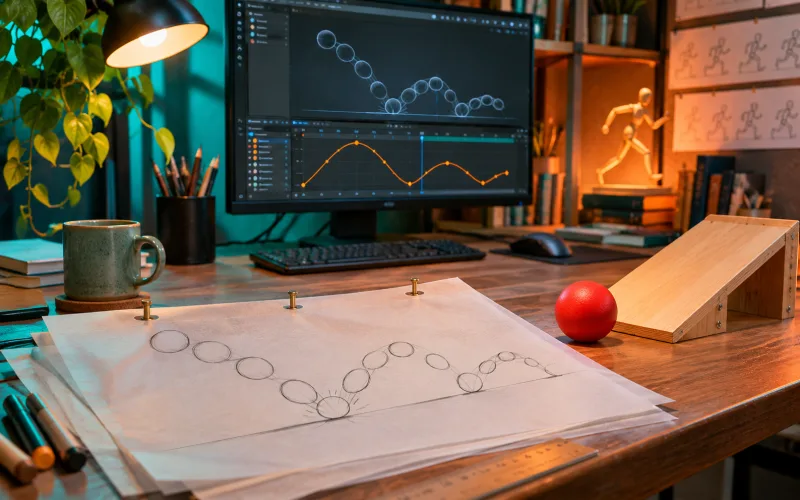
Separate timing from spacing
Timing describes how long an action takes; spacing describes how positions change between frames. The same start and end poses can feel very different when intermediate positions change. Begin with a simple shape so you can study movement without being distracted by drawing detail or complex controls.
Animate a bouncing ball
Choose a ball with a particular weight and material in mind. Sketch its arc and decide when it contacts the ground. Compare even spacing with positions that spread apart during faster movement. Watch for unwanted pauses near impact and explain how your adjustments changed the sense of weight.
Move a simple object to a stop
Animate a box sliding and settling. Try a sudden stop, then a gradual deceleration. Add a small response only if the material and action justify it. This exercise develops control over the audience's perception of force without requiring a fully rigged character.
Add anticipation to an action
Make a shape prepare for a jump or turn before it moves. Compare versions with too little and too much preparation. Ask a viewer what they expected to happen and when they recognised it. Present the variations together so your portfolio shows observation and revision, not just a final clip.
Explore related courses