Photography Composition for Designers
Create more useful photographs by planning the subject, background, lighting, and space for accompanying text.
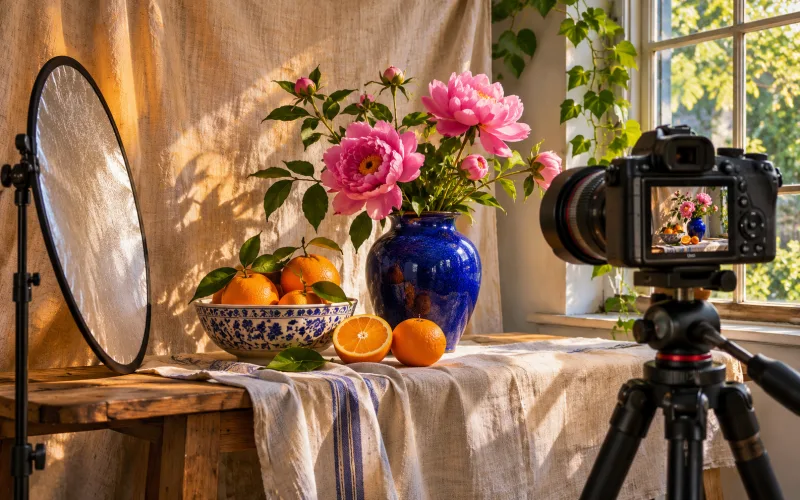
Start with the final use
Decide whether the photograph will fill a poster, website banner, or product card. Note the likely crop and whether words need to sit beside the subject. Shoot a few wider alternatives to preserve options. A beautiful image can still be unsuitable if the layout has no room for its message.
Simplify the frame
Look around the edges for distracting objects, awkward intersections, and bright areas that pull attention away. Move the camera or subject before assuming the problem must be edited later. Compare a close view with a wider one and choose the framing that communicates the idea most clearly.
Use light deliberately
Observe where the light comes from and how shadows describe the subject. Try changing the subject's position relative to a window. Check that important details are visible and that highlights retain useful information. Take test frames rather than relying only on how the scene looks to your eyes.
Prepare images responsibly
Select photographs for clarity and relevance rather than keeping every variation. Make restrained adjustments and preserve an original copy. Obtain permission where needed for people, locations, or commissioned subjects. Record image credits and export versions that suit the layout without unnecessary file weight.
Explore related courses