Build Believable 3D Materials Through Observation
Study colour, roughness, and surface detail to create materials that respond convincingly to light.
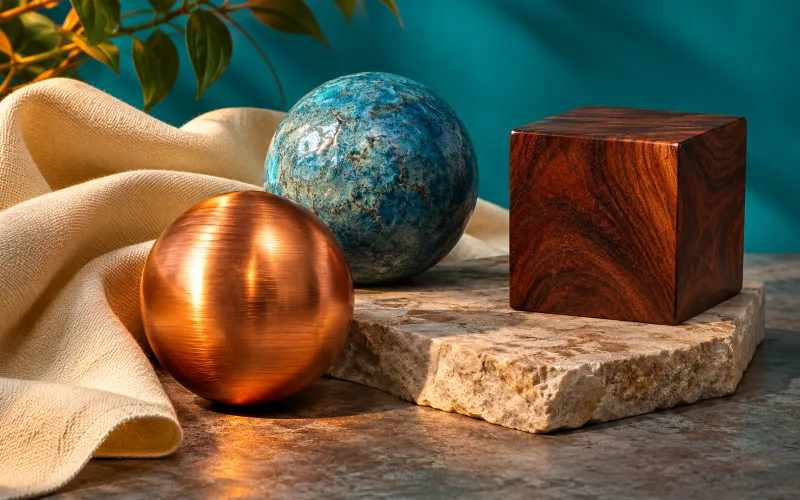
Observe a real reference
Choose an object you can examine closely, such as a ceramic cup or a painted tool. Notice how reflections change as you move it. Separate the underlying material from dirt, wear, and lighting effects. A single photograph can hide these distinctions, so compare several references where possible.
Start with simple properties
Set the broad surface colour and reflection behaviour before adding scratches or complex patterns. Review the material on a basic shape and on the actual model. Keep lighting reasonably neutral during early adjustments so an attractive setup does not disguise an inconsistent material response.
Add variation with a reason
Place wear where contact or use would plausibly occur. Vary roughness and surface detail rather than covering everything with equal noise. Check the scale of marks against the object. Tiny scratches that look interesting in a close-up preview may disappear or become distracting at the final distance.
Compare under different lighting
Test the result with a broad soft source and a more directional light. Watch whether the material still reads as intended. Show a reference study and a final render in your portfolio, identifying which assets you created and which were supplied for the exercise.
Explore related courses